
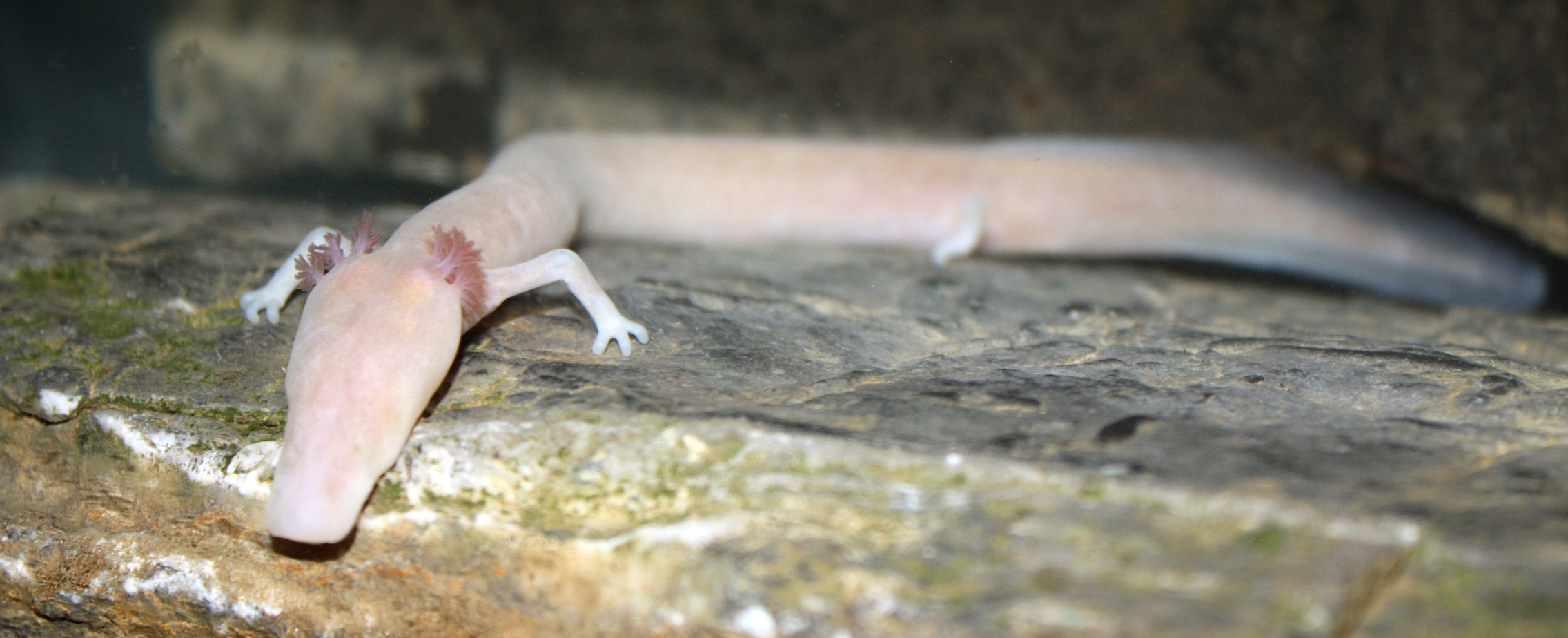
One of the longest-standing mysteries in European herpetology has finally been resolved. A new study published in Amphibia–Reptilia reveals that the olm (Proteus anguinus), one of Europe’s most iconic subterranean animals, is not a single widespread species. Instead, what we have long called the “human fish” or Europe’s “cave dragon” represents nine distinct species, hidden within the underground waters of the Dinaric Karst.
The international study was co-authored by Dr Dušan Jelić of BIOTA, who has spent nearly two decades exploring the subterranean waters of the Dinaric Karst and studying Proteus populations, including through demanding cave-diving expeditions.
For BIOTA, however, one of the most exciting conclusions of this research lies particularly close to home: Croatia emerges as a major centre of diversity for the entire genus Proteus.
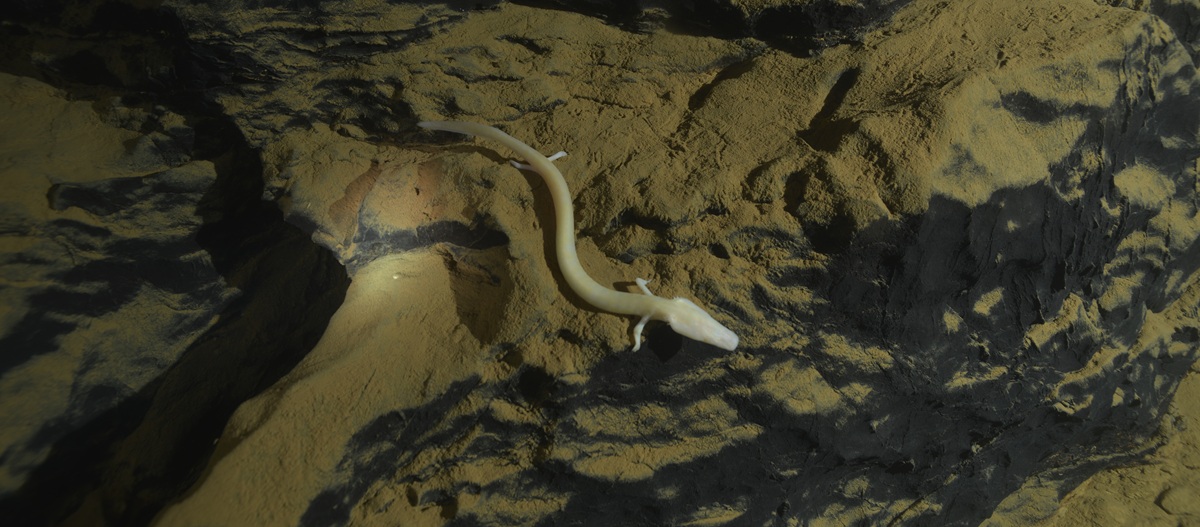
Proteus ikae has been evolving independently for 16 million years (photo: Dušan Jelić)
From one species to nine
Olms have been studied for more than 350 years. Because populations from different parts of the Dinaric Karst look remarkably similar, most were eventually classified as a single species, Proteus anguinus. Their pale skin, reduced eyes, elongated bodies and external gills are all adaptations to a lifetime spent in complete darkness.
Genetics, however, has gradually revealed a very different story.
Populations inhabiting different karst regions and groundwater systems are deeply genetically differentiated. The new study brings together genetic evidence, morphology, biogeography, museum specimens and almost two centuries of taxonomic history to recognize nine evolutionary lineages as separate species. Some of these lineages diverged millions of years ago, with the deepest split dating back approximately 16 million years.
Three species—Proteus ikae, P. bosniensis and P. maurii—are formally described as new to science, while historical names are restored for several others.
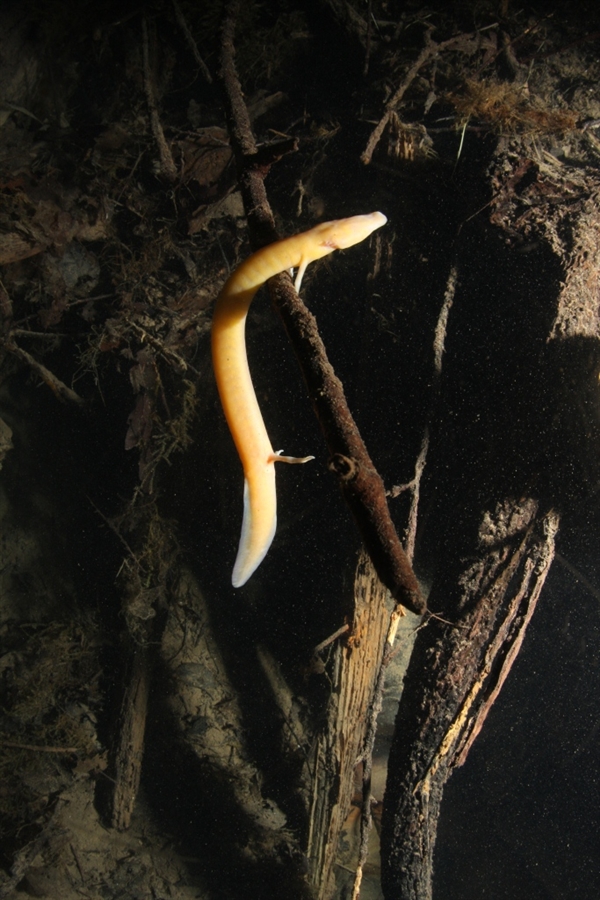
Proteus croaticus in its natural habitat (photo: Petra Kovač Konrad)
Croatia may harbour five species
The revised taxonomy places Croatia in an extraordinary position. Three species are currently confirmed from Croatian territory: Proteus croaticus, P. ikae and P. carrarae.
Proteus ikae inhabits the karst aquifers of Istria and represents the earliest-diverging living lineage of the entire genus. Its lineage has been evolving independently for approximately 16 million years, making the Istrian olm an exceptional component of Croatia’s natural heritage.
Proteus croaticus inhabits the central Croatian Dinaric Karst, while P. carrarae represents the southern Dinaric lineage extending into the southernmost parts of Croatia.
But the real diversity of Croatian olms may be even greater.
Based on the geography of the karst and the expected continuity of underground habitats, Proteus bosniensis may also occur on the Croatian side of the upper Una River and beneath the Lička Plješevica massif. Similarly, P. freyeri could potentially extend into the Croatian–Slovenian border region along the Kupa River, possibly reaching the karst areas towards Ozalj.
These populations have yet to be confirmed genetically and should therefore be regarded as important targets for future research. If their presence is demonstrated, Croatia could harbour as many as five of the nine currently recognized species of Proteus.
That would mean that more than half of the known global diversity of this extraordinary European cave-salamander lineage occurs within Croatia.
Why taxonomy matters for conservation
Recognizing these species is far more than an exercise in giving them new names.
When Proteus was considered a single species distributed across much of the Dinaric Karst, its overall range appeared relatively large. Dividing that range among nine independently evolving species reveals a much more concerning picture.
Some species occupy extremely restricted areas and may depend on a single groundwater system. Pollution, excessive groundwater extraction, changes in hydrology or major infrastructure development could therefore affect a substantial part—or potentially all—of the global population of an individual species.
For this reason, the study also assessed the conservation status of the newly recognized species using IUCN Red List criteria. The results show that all require conservation attention, while two have such restricted distributions that a single major pollution event could potentially threaten their survival.
For Croatia, the new taxonomy therefore brings considerable responsibility. Protecting Proteus can no longer mean protecting one widespread species. It means identifying and safeguarding individual evolutionary lineages, their groundwater systems and the surface catchments upon which those underground ecosystems depend.
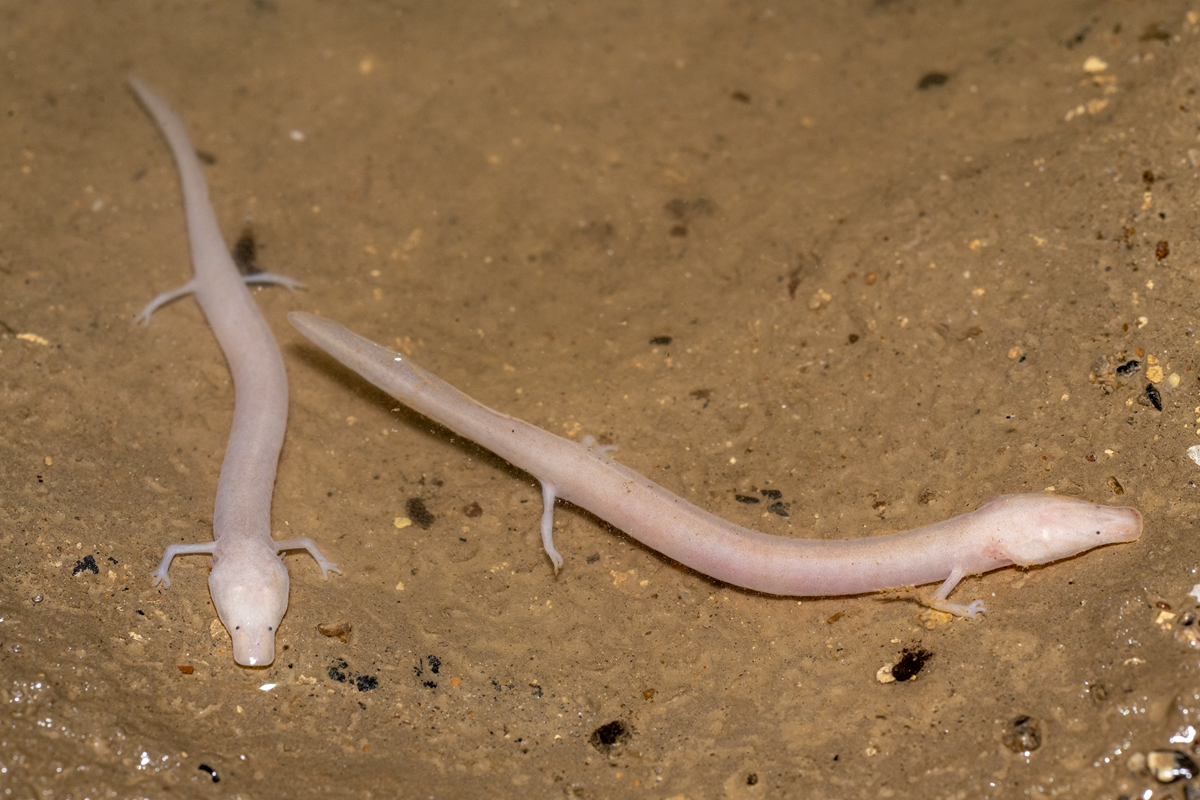
Proteus bosniensis juvenile individuals (7- 8 cm) with still-visible eyes. After this age, the eyes disappear (photo: Daniel Jablonski)
The exploration has only begun
Despite centuries of research, much of the subterranean Dinaric Karst remains biologically unexplored. Olms inhabit vast networks of flooded passages that can extend deep beneath the landscape, making them among the most challenging amphibians in Europe to study.
Cave diving remains essential for directly exploring many of these habitats, but new approaches such as environmental DNA (eDNA) now allow researchers to detect Proteus from water samples, opening completely new possibilities for mapping previously unknown populations.
For BIOTA, this discovery therefore marks not the end of a long taxonomic story, but the beginning of a new phase of exploration.
One of our next challenges will be to establish the true distribution of Croatia’s Proteus species—and particularly to determine whether P. bosniensis and P. freyeri also cross the political borders above ground into the interconnected karst systems beneath Croatia.
After more than 350 years of scientific research, the olm has managed to surprise us once again.
There is not just one cave dragon beneath Croatia. There are at least three—and perhaps as many as five.
Reference:
Dufresnes C, Monod-Broca B, Jelić D, Šunje E, Manenti R, Barzaghi B, Zimić A, Chouchane K, Denoël M, Ohler A, Jablonski D. 2026. Olm Sweet Olm: Unearthing nine species of Proteus hidden beneath the Dinaric Karst. Amphibia–Reptilia. In Press.



0 Comments